OSI Model Cheat Sheet
The Open Systems Interconnection (OSI) model is a conceptual framework that divides network communication into seven layers. Each layer has a specific role, from transmitting raw bits over a physical medium to delivering data to end-user applications. Use this cheat sheet as a quick reference for layer names, functions, protocols, and data units.
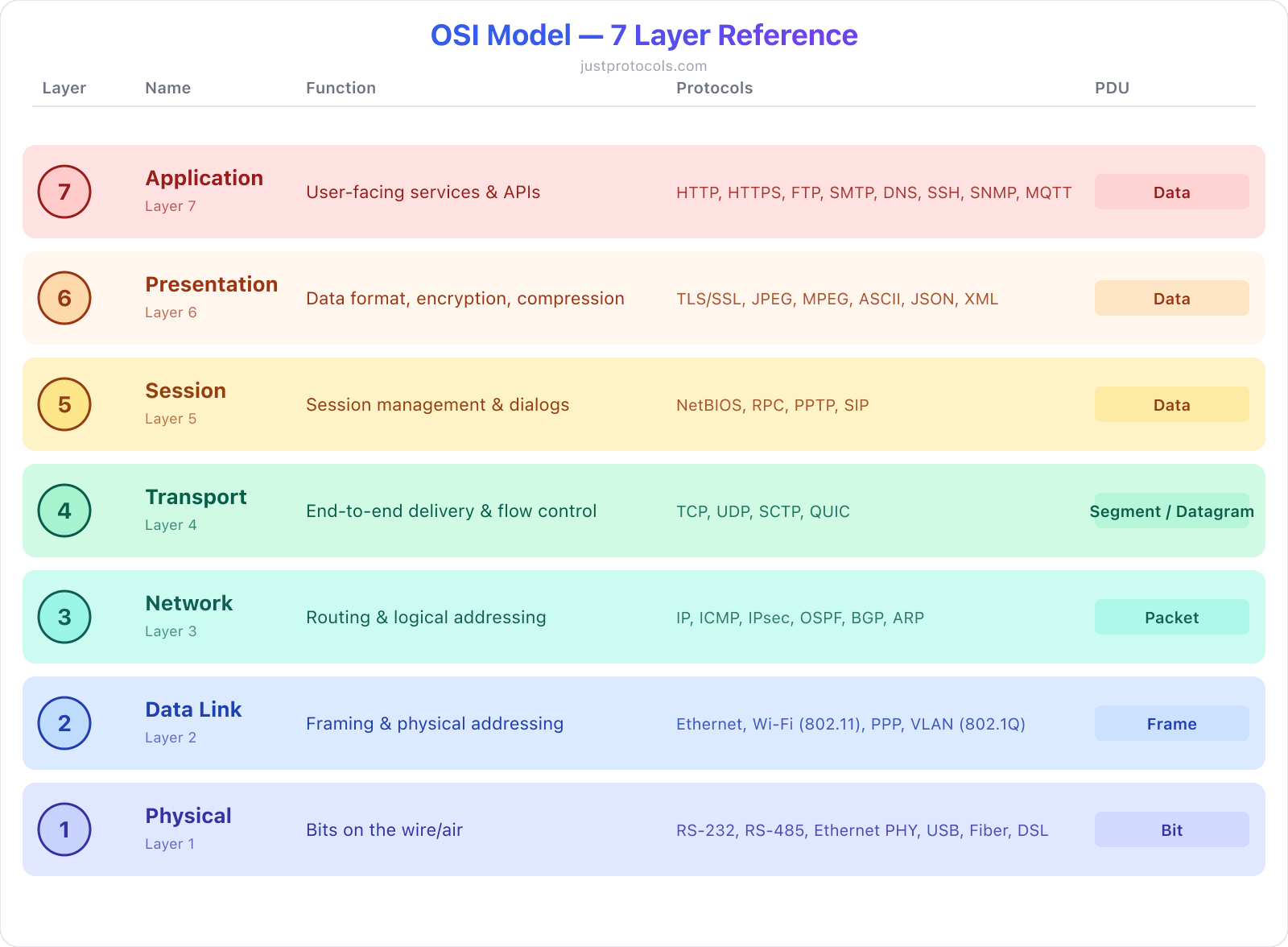
OSI vs TCP/IP Model
The OSI model has 7 layers and is primarily a teaching and reference framework. The TCP/IP model, which the internet actually uses, collapses these into 4 practical layers:
OSI Model (7 Layers)
- 7 – Application → Application
- 6 – Presentation → Application
- 5 – Session → Application
- 4 – Transport → Transport
- 3 – Network → Internet
- 2 – Data Link → Network Access
- 1 – Physical → Network Access
TCP/IP Model (4 Layers)
- Application HTTP, FTP, SMTP, DNS
- Transport TCP, UDP
- Internet IP, ICMP, ARP
- Network Access Ethernet, Wi-Fi
Memory Aid
A popular mnemonic for remembering the OSI layers from Layer 1 (Physical) to Layer 7 (Application):
Please Do Not Throw Sausage Pizza Away
- Physical → Data Link → Network → Transport → Session → Presentation → Application