Home/Cheat Sheets/Common Ports

Common Ports Cheat Sheet

A quick-reference guide to the most commonly used network port numbers — organized by category with port, protocol, service name, and description.
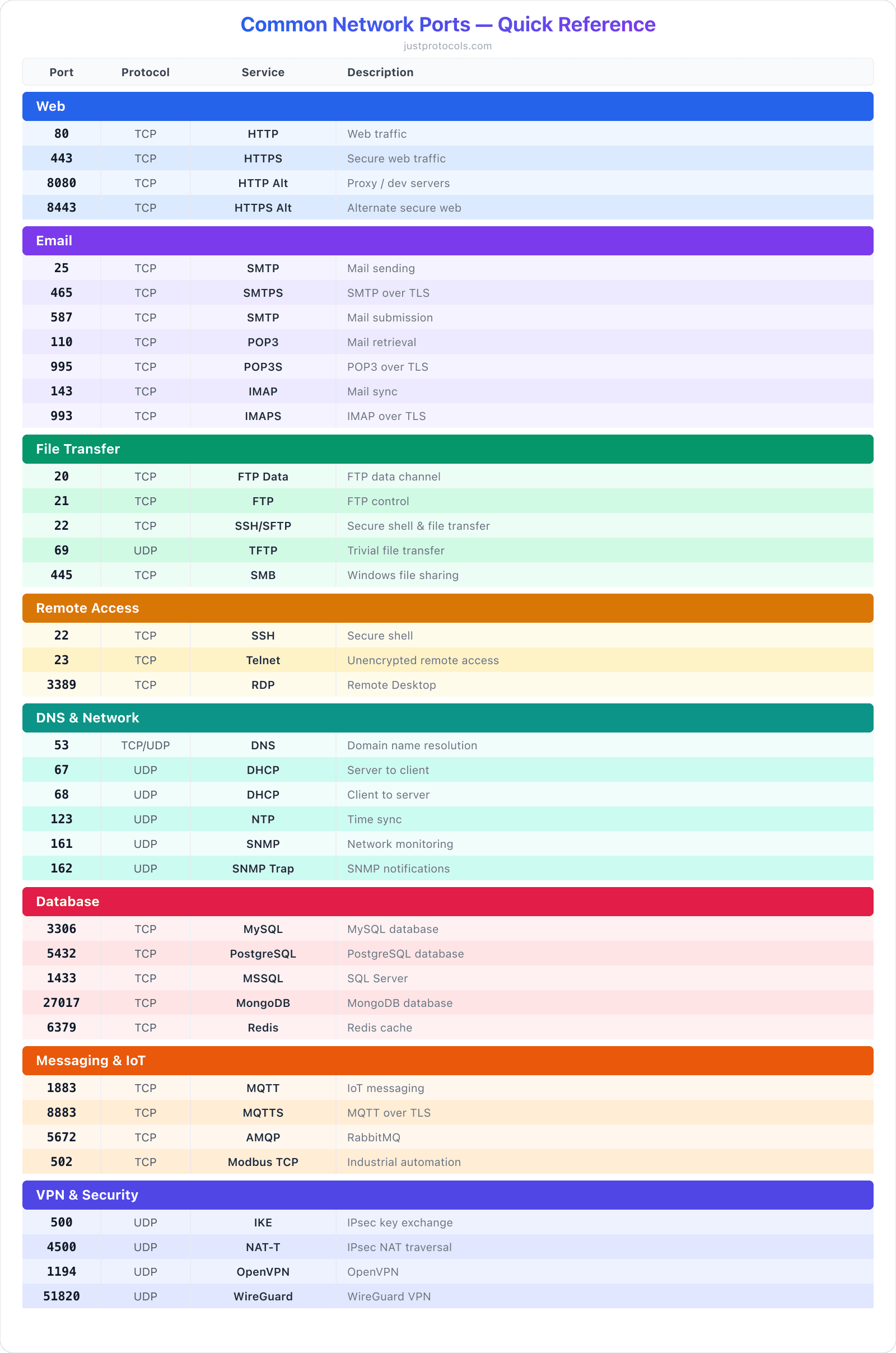
Common Network Ports — Quick Referencejustprotocols.comPortProtocolServiceDescriptionWeb80TCPHTTPWeb traffic443TCPHTTPSSecure web traffic8080TCPHTTP AltProxy / dev servers8443TCPHTTPS AltAlternate secure webEmail25TCPSMTPMail sending465TCPSMTPSSMTP over TLS587TCPSMTPMail submission110TCPPOP3Mail retrieval995TCPPOP3SPOP3 over TLS143TCPIMAPMail sync993TCPIMAPSIMAP over TLSFile Transfer20TCPFTP DataFTP data channel21TCPFTPFTP control22TCPSSH/SFTPSecure shell & file transfer69UDPTFTPTrivial file transfer445TCPSMBWindows file sharingRemote Access22TCPSSHSecure shell23TCPTelnetUnencrypted remote access3389TCPRDPRemote DesktopDNS & Network53TCP/UDPDNSDomain name resolution67UDPDHCPServer to client68UDPDHCPClient to server123UDPNTPTime sync161UDPSNMPNetwork monitoring162UDPSNMP TrapSNMP notificationsDatabase3306TCPMySQLMySQL database5432TCPPostgreSQLPostgreSQL database1433TCPMSSQLSQL Server27017TCPMongoDBMongoDB database6379TCPRedisRedis cacheMessaging & IoT1883TCPMQTTIoT messaging8883TCPMQTTSMQTT over TLS5672TCPAMQPRabbitMQ502TCPModbus TCPIndustrial automationVPN & Security500UDPIKEIPsec key exchange4500UDPNAT-TIPsec NAT traversal1194UDPOpenVPNOpenVPN51820UDPWireGuardWireGuard VPN
Common network ports cheat sheet organized by category — web, email, file transfer, remote access, DNS, database, messaging, and VPN.

Well-Known Port Ranges

  • 0 – 1023Well-Known Ports. Reserved for common system services and protocols (e.g., HTTP on 80, HTTPS on 443, DNS on 53). Typically require root or administrator privileges to bind.
  • 1024 – 49151Registered Ports. Assigned by IANA for specific applications and services (e.g., MySQL on 3306, RDP on 3389). Can be used by normal user processes.
  • 49152 – 65535Dynamic / Ephemeral Ports. Used temporarily by client applications for outbound connections. The OS assigns these automatically when a program opens a socket.

Learn More About These Protocols

Dive deeper into how these protocols work with our detailed protocol guides: